Solar ATAP launch
New Policy January 1, 2026

Solar ATAP Officially Launches: No Fixed Quota

The Ministry of Energy Transition (PETRA) has officially launched the Solar Accelerated Transition Action Programme (Solar ATAP) to replace NEM 3.0. The new framework removes the quota limit for applicants and allows Commercial users to export excess energy at the System Marginal Price (SMP). This represents a major policy shift to accelerate Malaysia's renewable energy adoption.

CRESS programme
Corporate January 5, 2026

CRESS Program: Third Party Grid Access

The Corporate Renewable Energy Supply Scheme (CRESS) guidelines are now live. This program allows large factories to purchase green electricity directly from solar developers via the national grid (Third Party Access), bypassing roof limitations.

GITA tax allowance
Tax Savings January 10, 2026

GITA Tax Allowance Merged & Extended

MIDA has confirmed that the Green Investment Tax Allowance (GITA) is extended through 2026. Note that "GITA Project" (Own Consumption) is now merged with "GITA Asset", streamlining the application process for businesses claiming the 100% tax allowance.

Solar capacity increase
Technology January 12, 2026

Solar Capacity Limit Increased to 100%

Under the new Solar ATAP guidelines, commercial and industrial users are now permitted to install solar PV systems up to 100% of their Maximum Demand (MD), an increase from the previous 75% limit.

Rooftop solar panels installation
Policy December 22, 2025

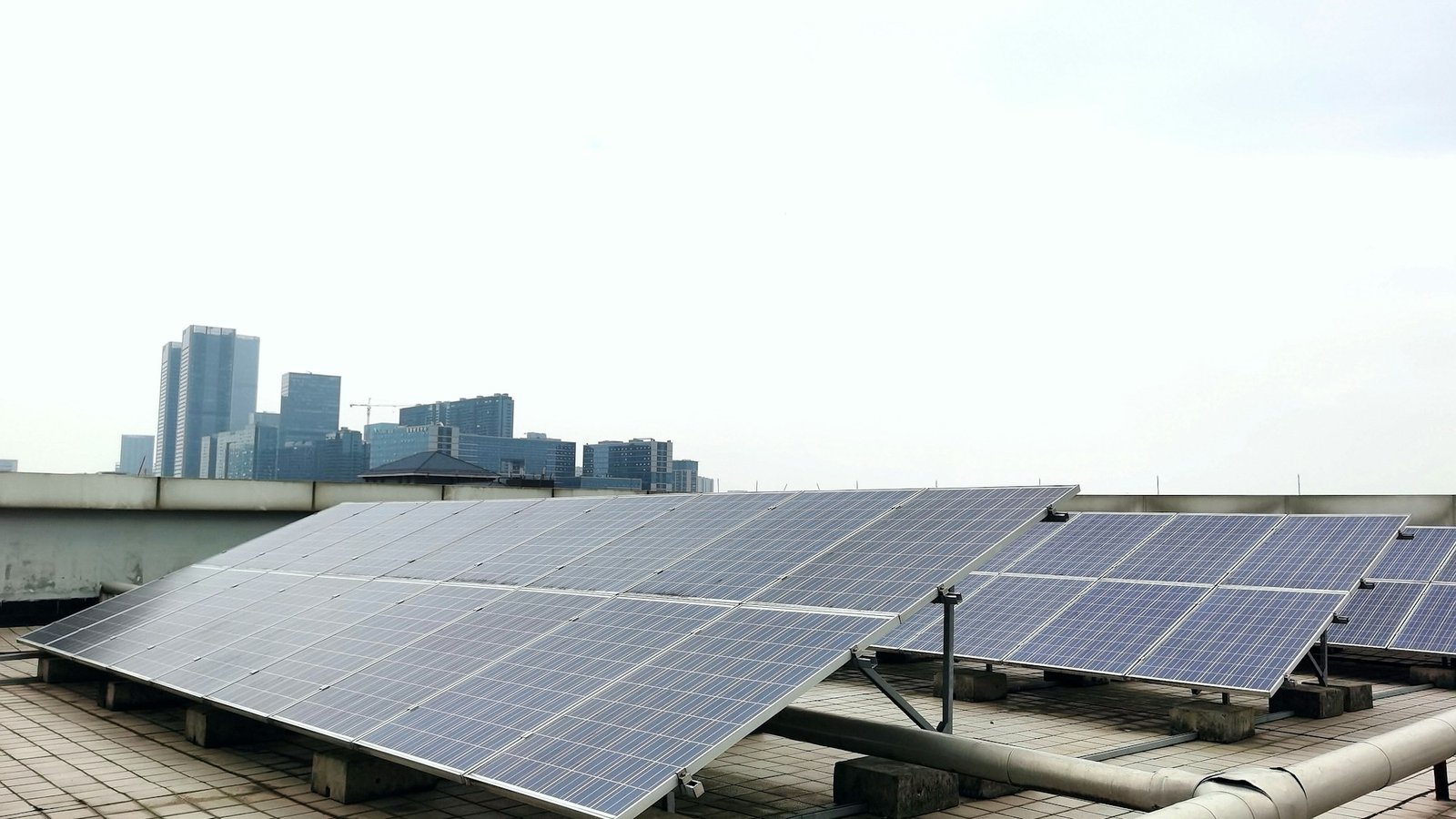
Solar ATAP Expected to Attract More Rooftop Solar Installations

Industry players have welcomed Solar ATAP's removal of key technical limitations that previously held back adoption. Installations are now allowed up to 100% of maximum demand (up from 85%), the 60% fuse rating cap has been removed, and three-phase domestic capacity has been raised from 12.5 kW to 15 kW. The Malaysian Photovoltaic Solar Energy Association (MPSEA) praised the reforms as a significant step forward.

Source: The Star
PETRA Solar ATAP announcement
Policy December 19, 2025

PETRA Confirms Solar ATAP Launch on January 1, 2026

PETRA officially confirmed that Solar ATAP will launch on 1 January 2026, with guidelines published on 31 December 2025. Domestic single-phase systems are capped at 5 kW, while three-phase capacity is increased to 15 kW. The programme launches with no fixed quota, though the government retains authority to impose a cap if grid stability is at risk.

PETRA Solar ATAP implementation
Policy December 18, 2025

PETRA Set to Implement Solar ATAP Renewable Energy Programme

Bernama reported that PETRA is ready to implement Solar ATAP, the successor to NEM which ended on 30 June 2025. The revised launch date was set for 1 January 2026, shifted from the originally announced December 1. Applications will open via the SEDA website, with Energy Commission guidelines published on 31 December 2025.

Source: Bernama
Solar ATAP delay
Policy December 2, 2025

Solar ATAP Registration Delayed to January 2026

SoyaCincau reported that Solar ATAP registration has been pushed back from the originally planned 1 December 2025 to 1 January 2026. The Energy Commission confirmed programme guidelines would be published on 31 December 2025. Existing NEM customers can continue under their contracts, while those whose offset periods expire may transition to SelCo, CREAM, or install energy storage systems.

Source: SoyaCincau
Malaysia rooftop solar landscape
Policy November 25, 2025

TransitionZero Analyses Malaysia's Evolving Rooftop Solar Landscape

TransitionZero published an analytical review of Malaysia's rooftop PV trends, examining the evolution from NEM to Solar ATAP and the broader policy context. The report provides independent monitoring data on Malaysia's progress toward its renewable energy targets and the effectiveness of rooftop solar incentive programmes.

Source: TransitionZero
Solar ATAP scheme launch
Policy November 19, 2025

Malaysia to Launch Solar ATAP Scheme on December 1

PETRA announced Solar ATAP as the direct successor to NEM, initially targeting a 1 December 2025 registration date. The programme retains NEM's core energy offset principle and incorporates the system marginal price mechanism from NEM NOVA. Existing NEM contract holders would retain their current terms, with options to switch to SelCo, CREAM, or battery storage when their offset periods expire.

Source: SolarQuarter
Malaysia solar energy HJT technology
Technology November 3, 2025

Malaysia's Solar Energy Ambitions Get a Boost with HJT Technology

A tripartite agreement signed on 17 October 2025 between Amerivexx Sdn Bhd, China's Anhui Huasun Energy, and Shanghai Investigation Design and Research Institute will bring heterojunction (HJT) photovoltaic technology to Malaysia. The initial phase involves a 120 MW ground-mounted PV station, with offshore PV platforms targeted to generate up to 1 GW by 2030. Wind and solar currently account for just 2% of Malaysia's total energy generation.

Budget 2026 renewable energy
Budget 2026 October 10, 2025

Budget 2026: What It Means for Renewable Energy and Solar

Budget 2026, tabled at RM 470 billion, includes key renewable energy measures: Solar ATAP with a 500 MW ceiling for rooftop installations, LSS6 adding nearly 2 GW of new capacity (RM 6 billion in private investment), and CRESS projected at 500 MW. A carbon tax launches in 2026 targeting high-emission sectors at an expected rate of RM 35-45 per tonne. Green financing is supported through GTFS 5.0.

Source: Sunview Group
Solar ATAP replaces NEM
Policy September 12, 2025

Government to Roll Out Solar ATAP in December to Replace NEM

PETRA announced the Solar Accelerated Transition Action Programme (Solar ATAP) to replace the Net Energy Metering scheme which ended 30 June 2025. The programme allows solar installations up to 100% of maximum demand, with excess energy sold back at the System Marginal Price (SMP). Solar ATAP aligns with Malaysia's target of 70% renewable energy capacity by 2050.

Source: Bernama | RTM
Rooftop solar initiative
Policy September 11, 2025

New Rooftop Solar Initiative to Launch Without Fixed Quota

Consumer tech portal Lowyat.NET reported on the upcoming Solar ATAP programme, explaining the shift from NEM's quota-based system to an open application model. Energy offsets will be calculated using the System Marginal Price, which fluctuates every 30 minutes based on demand, designed for long-term sustainability of the solar export framework.

Source: Lowyat.NET
Large-scale solar Malaysia
Policy August 25, 2025

Malaysia Ramps Up Large-Scale Solar to Hit 40% RE Target

Malaysia is expanding large-scale solar (LSS) projects to achieve its 40% renewable energy target by 2040. Battery Energy Storage Systems (BESS) and smart grid technologies are being deployed to improve grid flexibility. The government is also pursuing the ASEAN Power Grid initiative for cross-border energy trade. Policy frameworks include the National Energy Transition Roadmap (NETR) and the 13th Malaysia Plan.

Source: Malay Mail
Net metering rooftop PV
Technical July 2, 2025

Malaysia Upgrades Net Metering Scheme for Rooftop PV

International solar trade publication pv magazine reported that approximately 1.7 GW of PV systems are currently operating under NEM programmes, with an additional 595 MW under development. Installed solar capacity reached 2,306 MW at end of 2024. NEM 3.0's total quota of 2.5 GW is split across NEM Rakyat (700 MW), NEM GoMEn (100 MW), and NEM Nova (1.7 GW).

Source: pv magazine
Solar rooftop offset charges
Policy July 1, 2025

Rooftop Solar Users Can Offset Non-Energy Charges, Ministry Confirms

PETRA confirmed that low-voltage rooftop solar users can continue offsetting their electricity bills, including non-energy charges such as network and capacity costs, on a kWh basis. NEM 2.0 users retain full offsetting privileges. Commercial and industrial NEM 3.0 consumers can offset against the average system marginal price. Settlement periods are standardised to 12 months across all rooftop solar programmes.

Solar tariff uncertainty
Market July 1, 2025

Rooftop Solar Take-Up Slows Amid New Power Tariff Uncertainty

Rooftop solar uptake slowed significantly as Malaysia transitioned to a new itemised electricity tariff structure separating energy costs from non-energy charges. The commercial/industrial sector saw the sharpest reversal, with 282.69 MW outstanding. The residential sector had 13.19 MW unfilled from a 100 MW quota. The central question was whether excess solar energy could offset the new non-energy charges.

NEM Rakyat expansion
Policy May 26, 2025

Malaysia Expands NEM Rakyat Quota by 100 MW

PETRA added an extra 100 MW to the NEM Rakyat residential quota after the existing allocation was fully subscribed, bringing the total to 600 MW since launch in 2011. The additional quota was valid until 30 June 2025. NEM Rakyat operates on a 1-for-1 offset: every 1 kWh exported to the TNB grid earns 1 kWh of import credit on a 10-year contract.

Source: SolarQuarter
Rooftop solar mechanism
Policy May 23, 2025

Government Mulls New Rooftop Solar Mechanism, Adds 100 MW

The government added 100 MW to the NEM Rakyat quota just two days after the existing 600 MW was fully exhausted. Three rooftop solar options remained available: NEM Rakyat (surplus offsetting), SelCo (self-consumption), and CREAM (aggregators rent rooftop space at 15 sen/kWh). NEM Nova (C&I) still had 524.65 MW remaining out of 1,700 MW. The Ministry committed to more inclusive future RE initiatives.

NEM 3.0 extension
Policy October 18, 2024

Government Extends Rooftop Solar Programme Till End-June 2025

Prime Minister Anwar Ibrahim announced that NEM 3.0 would be extended from 31 December 2024 to 30 June 2025. The programme had a combined 1,600 MW capacity across three categories: NEM Rakyat (400 MW, 89.9% approved), NEM GoMEn (100 MW, 82.15% approved), and NEM Nova (1,100 MW, 92.37% approved), demonstrating strong demand for rooftop solar across all sectors.

SEDA Solar ATAP portal
Reference Accessed March 2026

SEDA Malaysia: Official Solar ATAP Programme Page

SEDA Malaysia's official Solar ATAP portal provides comprehensive programme details. The programme is open year-round with no fixed quota. Two purchase models are available: Power Purchase Agreement (PPA) where an investor owns and maintains the system, and Solar Leasing with fixed monthly payments and ownership transfer at lease end. Applications are submitted through SEDA's online portal.

Source: SEDA Malaysia