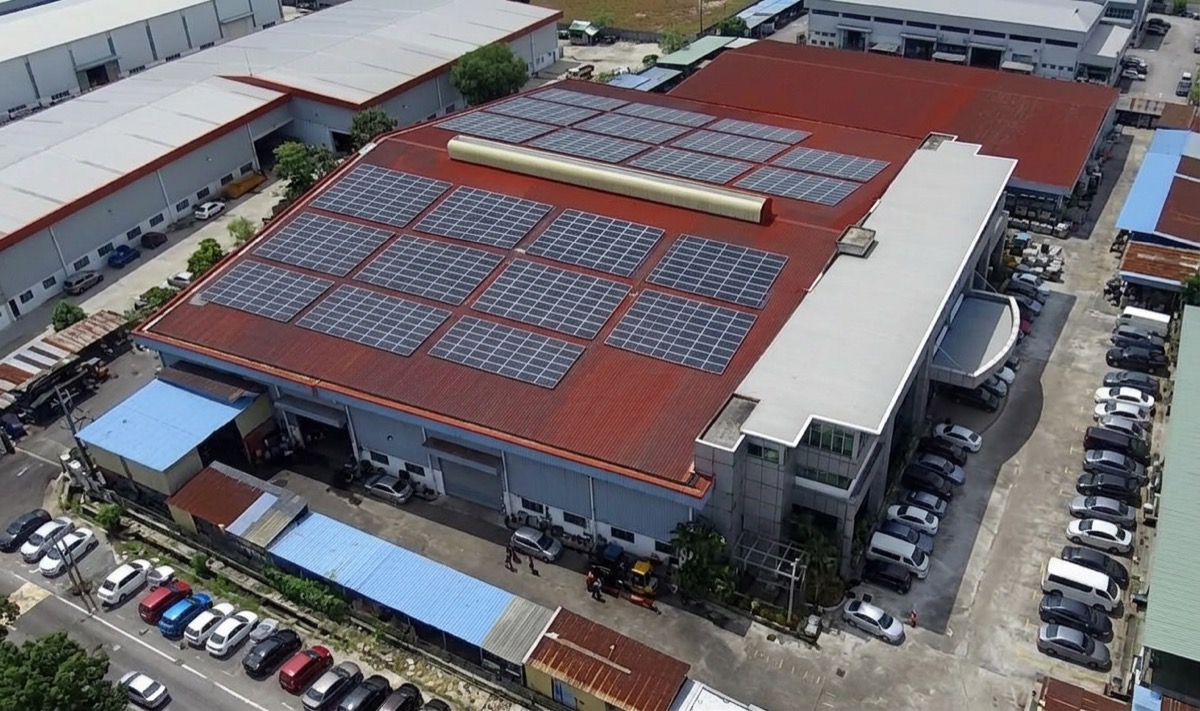
Factory solar installation in Malaysia follows the Solar ATAP rules for non-domestic consumers. Your system goes up to 100% of Maximum Demand, capped at 1 MW, and needs a TNB technical study above 72 kW. This guide covers each permit and grid connection step for an industrial facility, how to plan the work around production, and what to check in an industrial solar quote.
1. Factory solar system size limits
- Size cap: up to 100% of your Maximum Demand, subject to technical assessment, with a maximum of 1,000 kW per account. [Source: SEDA]
- Battery rule: a BESS is required only for systems above 1 MWac. [Source: Baker McKenzie]
- Export value: surplus solar earns the average SMP, about RM0.19/kWh in early 2026. Read the Solar ATAP export rate guide.
- Eligibility: your TNB account must not be registered under NEM or SELCO.
The cap is a ceiling, not a target. Size a factory system to the load your production lines draw in daylight hours, since self-consumed solar saves the full tariff.
2. Permits and grid connection steps for industrial solar
- Bill and load review. Share 12 months of TNB bills and Maximum Demand readings. The technical study needs a Customer Load Profile Form.
- Roof and electrical assessment. Check roof structure and condition, shading, main switchboard and transformer capacity, and the single line diagram (SLD).
- System design. Panel layout, inverter selection, SLD and protection settings, designed to IEEE 1547, IEC 61727 and MS 1837.
- TNB technical study. Above 72 kW, TNB or its appointed consultant runs a Connection Assessment Study (CAS) or Power System Study (PSS). Fees are in the table below.
- Installation, testing and commissioning. SEDA accepts the application only after installation work is complete and commissioned.
- SEDA application on eATAP. A SEDA Registered PV Service Provider (RPVSP) submits the application with the documents listed below.
- Export meter and contract. TNB installs the meter and the 10-year Solar ATAP contract starts.
Solar ATAP technical study fees for factories
| System size | Study | Fee |
|---|---|---|
| 1 kW to 72 kW | No study | None |
| Above 72 kW to 180 kW | Connection Assessment Study (CAS) | RM 1,000 |
| Above 180 kW to 425 kW | CAS | RM 5,000 |
| Above 425 kW to 1 MW | CAS (MV includes Fault Current Analysis) | RM 8,000 |
| HV connection | Power System Study (PSS) | RM 15,000 |
Source: SEDA Solar ATAP
Documents for the SEDA application
- Solar ATAP Certificate
- Solar ATAP Contract (application form) and Terms & Conditions
- Letter of authorisation with company SSM details and the representative's IC
- Generating Licence copy, if required under the Electricity Supply Act 1990
- Form G and Form H, with the single line diagram and test results
- Solar ATAP Testing & Commissioning Form
- Competent person certificate and Registered Electrical Contractor documents (Forms N and Q)
For the general process, read how to apply for Solar ATAP and the Solar ATAP documents checklist.
3. Plan factory solar installation around production
Most rooftop work runs alongside normal operations. The tie-in to your main switchboard needs a short power shutdown. Plan these points with your installer before work starts:
- Shutdown window: book the switchboard tie-in on a weekend, public holiday or planned maintenance day.
- Lifting plan: agree crane or hoist times and ground exclusion zones away from loading bays and forklift routes.
- Permit-to-work: align roof access, hot work and electrical isolation with your factory safety procedures.
- Clean areas: for food, pharma or electronics lines, agree dust control and roof penetration rules.
4. Industrial solar quote checklist
An itemised quote and realistic financial projection protect you from surprises. Check each industrial solar panel installation quote for:
- Itemised equipment: PV module brand, wattage and quantity, inverters, mounting, cabling, protection and monitoring.
- Itemised services: engineering, installation, testing and commissioning, TNB study fee and authority fees.
- Savings assumptions in writing: tariff used, self-consumption ratio, SMP export rate and panel degradation.
- Maximum Demand effect: whether the model claims MD savings, and on what basis.
- Warranties: module, inverter, workmanship and defects liability period.
- O&M scope: cleaning, monitoring and repair after handover. See solar panel maintenance.
- Payment terms: milestones tied to delivery, installation and commissioning.
- Assessment first: a roof and electrical assessment completed before the final price.
5. How to choose a factory solar EPCC
- Ask for SEDA RPVSP registration and check it in SEDA's directory.
- Ask for factory references at your size, for example 500 kWp to 1 MW rooftops.
- Ask how monitoring, maintenance and warranty claims work after handover.
- Ask for both outright purchase and zero-capex options. Read our solar financing guide.
- Ask what documents the provider prepares for your GITA claim. Read our GITA solar guide.
Jana Bina Makmur delivers factory solar with licensed EPCC partners. Our industrial references include a 400 kWp industrial warehouse in Selangor with RM200,000+ in yearly savings and a 70.68 kWp food manufacturing facility in Ipoh with a payback of about 4 years. See our projects.
Bottom line
Factory solar installation in Malaysia takes seven steps, from bill review to the TNB export meter. Start with 12 months of TNB bills and your SLD, size to daytime load, and judge every quote on itemised costs and written assumptions. For a full service overview, see commercial solar installation.
Frequently asked questions
What permits and grid connection steps are needed to install solar on an industrial facility?
Above 72 kW, TNB runs a Connection Assessment Study (CAS) or Power System Study (PSS) before installation. After installation and commissioning, a SEDA Registered PV Service Provider submits the Solar ATAP application on eATAP with Form G and H, the testing and commissioning form, competent person documents and a Generating Licence where the Electricity Supply Act requires one. TNB then installs the export meter.
How big a solar system is allowed for a factory?
Under Solar ATAP, a factory system goes up to 100% of Maximum Demand, subject to technical assessment, with a cap of 1 MW per account.
Is battery storage required for factory solar?
Only for systems above 1 MWac. Below 1 MWac, a BESS is optional. Factories add one for evening peaks or Maximum Demand reduction.
Can solar be installed without stopping production?
Most rooftop work runs alongside normal operations. The switchboard tie-in needs a short shutdown, which is usually booked on a weekend or planned maintenance day.
What should an itemised factory solar quote include?
Equipment by brand and quantity, services, TNB study and authority fees, written savings assumptions (tariff, self-consumption ratio, SMP export rate, degradation), warranties, O&M scope and payment milestones.